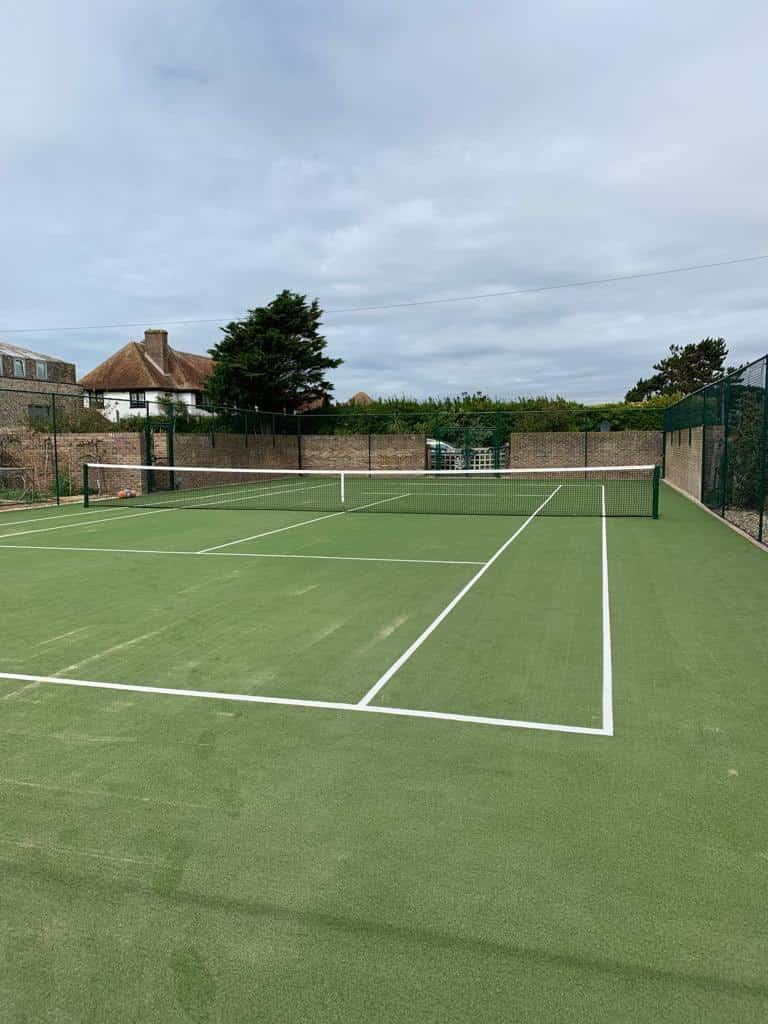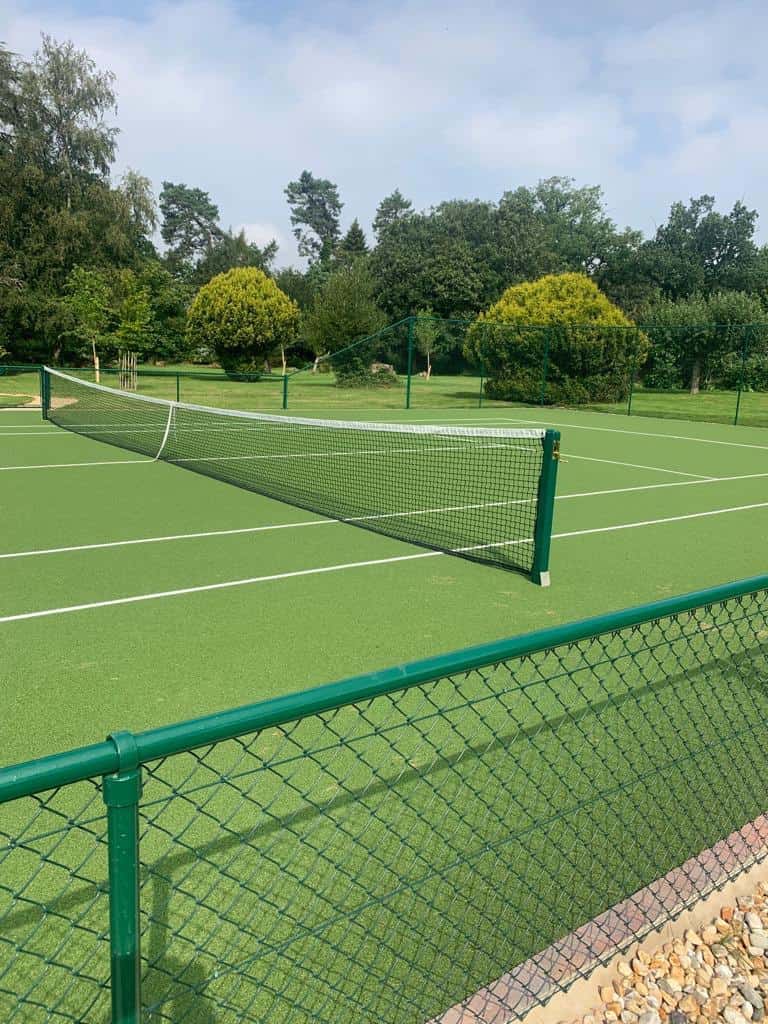
A tennis court is built to withstand repeated play and outdoor exposure, but no surface remains in perfect condition indefinitely. Weather, regular use, drainage performance and natural ageing can gradually affect the playing surface. Eventually, a court that once provided consistent ball response and comfortable movement may begin to show cracks, fading, surface wear or drainage problems.
However, deterioration does not automatically mean that complete reconstruction is necessary. Where the underlying court remains fundamentally sound, professional refurbishment can address worn components, restore playing characteristics and significantly extend the court’s usable life.
For tennis courts in Essex, UK, Tennis Court Construction Essex provides professional assessment and refurbishment solutions designed around the actual condition of the existing court.
What Does Tennis Court Refurbishment Involve?
Tennis court refurbishment is the process of improving an existing court without necessarily rebuilding the entire construction from the ground upwards.
The exact work required depends on the surface type, age, condition and underlying cause of deterioration.
Refurbishment May Include:
- Thorough surface cleaning
- Removal of moss and organic contamination
- Localised crack repairs
- Surface repairs
- Improvements to drainage-related areas
- Reapplication of specialist coatings
- Repainting court markings
- Repairs to surrounding features
- Replacement of worn net equipment
- General restoration of the playing area
The objective is not simply to make an ageing court look newer. Effective refurbishment should improve its condition, playability and ability to continue performing reliably.
When Is a Tennis Court a Good Candidate for Refurbishment?
The most important consideration is the condition of the underlying construction.
A worn surface can often be restored. Significant structural failure beneath the surface is more difficult to resolve through refurbishment alone.
Refurbishment May Be Appropriate When:
- Surface wear is primarily superficial
- Cracking is limited and repairable
- The court remains reasonably level
- The base remains stable
- Drainage is generally functional
- Coatings have faded or deteriorated
- Line markings have become worn
- Moss and contamination are affecting the playing surface
A professional assessment helps distinguish repairable deterioration from problems requiring more extensive reconstruction.
1. Refurbishment Can Address Surface Wear Before It Progresses
Surface deterioration usually develops gradually.
Areas receiving the greatest amount of play may begin wearing sooner, while exposure to the elements can affect the entire court over time.
Early refurbishment can address these changes before they become more substantial.
Signs of Surface Deterioration Include:
- Loss of texture
- Uneven wear
- Faded coatings
- Small cracks
- Minor surface breakdown
- Reduced visual definition
Allowing these problems to continue indefinitely can make future restoration more involved.
2. Cracks Can Sometimes Be Repaired
Cracking is one of the most noticeable signs of tennis court deterioration, but the presence of a crack does not automatically mean that the court has reached the end of its serviceable life.
The important question is why the cracking has occurred.
Cracks May Be Associated With:
- Ageing of the surface
- Localised movement
- Weather exposure
- Weaknesses in particular areas
- Movement within the underlying construction
Where cracks are limited and the base remains sufficiently stable, targeted repair may form part of a refurbishment programme.
Repeated or widespread cracking, however, can indicate a deeper structural problem requiring further investigation.
3. Professional Cleaning Can Restore a Neglected Surface
Outdoor tennis courts naturally collect dirt, leaves and organic material.
Moss and algae can also develop, particularly in areas that remain shaded or damp.
This contamination does more than affect appearance. It can influence grip, drainage and general playing conditions.
Specialist Cleaning Can Help:
- Remove accumulated contamination
- Improve the appearance of the court
- Restore surface texture
- Prepare the area for additional refurbishment
- Reveal defects previously hidden beneath dirt or growth
Cleaning is therefore often an important first stage rather than merely a cosmetic finishing process.
4. Refurbishment Can Improve Playing Characteristics
A tennis court should provide a reasonably consistent playing environment across the entire surface.
As coatings and surface materials wear, different sections can begin behaving differently.
Players may notice changes in:
- Ball bounce
- Surface grip
- Footing
- Movement
- General consistency
Refurbishing worn areas and restoring the surface can help produce more predictable playing characteristics.
This is particularly valuable for courts receiving frequent use, where consistent performance contributes significantly to the quality of play.
5. Drainage Problems Can Sometimes Be Addressed
Water management is critical to the long-term condition of an outdoor tennis court.
Persistent standing water can restrict use and contribute to surface deterioration.
Warning Signs Include:
- Puddles remaining after rainfall
- Particular areas drying much more slowly
- Moss repeatedly developing in the same locations
- Water collecting around court edges
- Visible low points
A professional assessment can determine whether the issue relates to surface contamination, localised levels, surrounding drainage or a more significant problem within the court construction.
Where the underlying drainage system remains fundamentally functional, refurbishment may provide opportunities to improve performance.
6. Recoating Can Restore the Playing Surface
Surface coatings naturally wear through repeated use and exposure.
Recoating can form an important part of refurbishment where the underlying surface remains suitable.
A correctly prepared and professionally applied coating can improve:
- Surface consistency
- Grip
- Appearance
- Court definition
- General playing quality
Preparation is essential. Applying a new coating over unresolved cracks, contamination or unstable areas is unlikely to produce a dependable result.
7. New Court Markings Can Improve Definition
Faded line markings can make an otherwise serviceable tennis court appear considerably more neglected than it actually is.
Following suitable surface preparation and restoration, court markings can be professionally reapplied.
Accurate, clearly defined lines improve both the presentation and practical usability of the court.
8. Refurbishment Can Address More Than the Playing Surface
The usability of a tennis court depends on more than the surface itself.
Other components can deteriorate over time and may need attention as part of a wider refurbishment project.
These Can Include:
- Net posts
- Nets
- Surrounding fencing
- Gates
- Court edges
- Access areas
- Associated drainage features
Considering the court as a complete facility helps ensure that refurbishment provides a meaningful improvement rather than concentrating solely on its appearance.
How Refurbishment Extends the Court’s Usable Life
The main value of refurbishment is preventative as well as restorative.
Addressing deterioration while the main construction remains serviceable can slow the progression of surface problems and maintain suitable playing conditions for longer.
Effective Refurbishment Can:
- Repair developing defects before they spread.
- Restore worn playing surfaces.
- Address contamination and organic growth.
- Improve drainage performance where appropriate.
- Renew coatings and markings.
- Maintain consistent playing characteristics.
- Protect otherwise serviceable court construction.
This makes periodic professional assessment particularly valuable for established tennis courts.
Refurbishment Is Not the Same as Covering Up Problems
Successful refurbishment requires proper diagnosis.
Simply filling visible cracks or applying a fresh coating without determining why deterioration has occurred can result in the same problems returning.
For example, repeated cracking may indicate movement beneath the surface. Standing water may result from more than surface contamination. Uneven areas could suggest changes within the supporting construction.
Professional refurbishment should therefore begin by identifying the cause of deterioration.
When Might Refurbishment Not Be Enough?
There are situations where the existing court has deteriorated beyond what routine refurbishment can reasonably resolve.
More Extensive Work May Be Required When There Is:
- Widespread structural cracking
- Significant movement within the base
- Extensive surface deformation
- Major drainage failure
- Large areas of unstable construction
- Repeated failure of previous repairs
- Substantial deterioration throughout the court
In these circumstances, continually treating surface symptoms may not restore reliable long-term performance.
A professional assessment can establish whether refurbishment remains appropriate or whether more comprehensive reconstruction should be considered.
Why Regular Court Assessments Are Valuable
Waiting until a tennis court becomes difficult to use can reduce the opportunities for straightforward remedial work.
Periodic inspection allows developing issues to be identified earlier.
Pay particular attention to:
- New cracks
- Increasing surface wear
- Persistent standing water
- Loose or deteriorating sections
- Moss and algae growth
- Fading coatings
- Worn line markings
- Changes in ball response
The earlier deterioration is understood, the easier it is to determine an appropriate maintenance or refurbishment strategy.
The Importance of Professional Tennis Court Refurbishment
Tennis court surfaces are specialist constructions. Effective refurbishment requires an understanding of how the surface, base, drainage and surrounding features interact.
At Tennis Court Construction Essex, we assess existing tennis courts throughout Essex, UK before recommending refurbishment work.
This ensures that attention is directed towards the actual causes of deterioration rather than simply improving the appearance of the surface.
Professional preparation is particularly important. Repairs, cleaning and surface treatments need to be completed correctly before new coatings or markings are applied if the finished result is expected to perform reliably.
Keeping a Tennis Court in Use for Longer
The useful life of a tennis court is influenced by its construction, usage, environment and maintenance history.
A proactive approach can help preserve an existing court by dealing with manageable deterioration before it develops into more significant failure.
This does not mean every ageing court can be refurbished indefinitely. Instead, refurbishment provides an opportunity to make better use of a court that remains fundamentally sound.
For court owners and managers in Essex, UK, professional assessment can help establish when that opportunity exists.
Conclusion
Yes, refurbishment can extend the usable life of a tennis court when the underlying construction remains suitable and deterioration can be effectively addressed.
Cleaning, crack repairs, surface restoration, recoating, renewed markings and attention to drainage or surrounding components can all contribute to bringing an ageing court back to a more functional and presentable condition.
The key is identifying whether problems are confined primarily to repairable areas or originate from more significant structural deterioration.
If your tennis court in Essex, UK is showing signs of wear, Tennis Court Construction Essex can assess its condition and recommend an appropriate refurbishment approach focused on restoring playability and helping you gain further useful service from the existing court.
Call us on: 01245 945 895
Click here to find out more about Tennis Court Construction Essex
Click here to complete our contact form and see how we can help with your tennis court.